
EU Customs Overhaul Tightens Pre-Arrival Rules for Ocean Freight
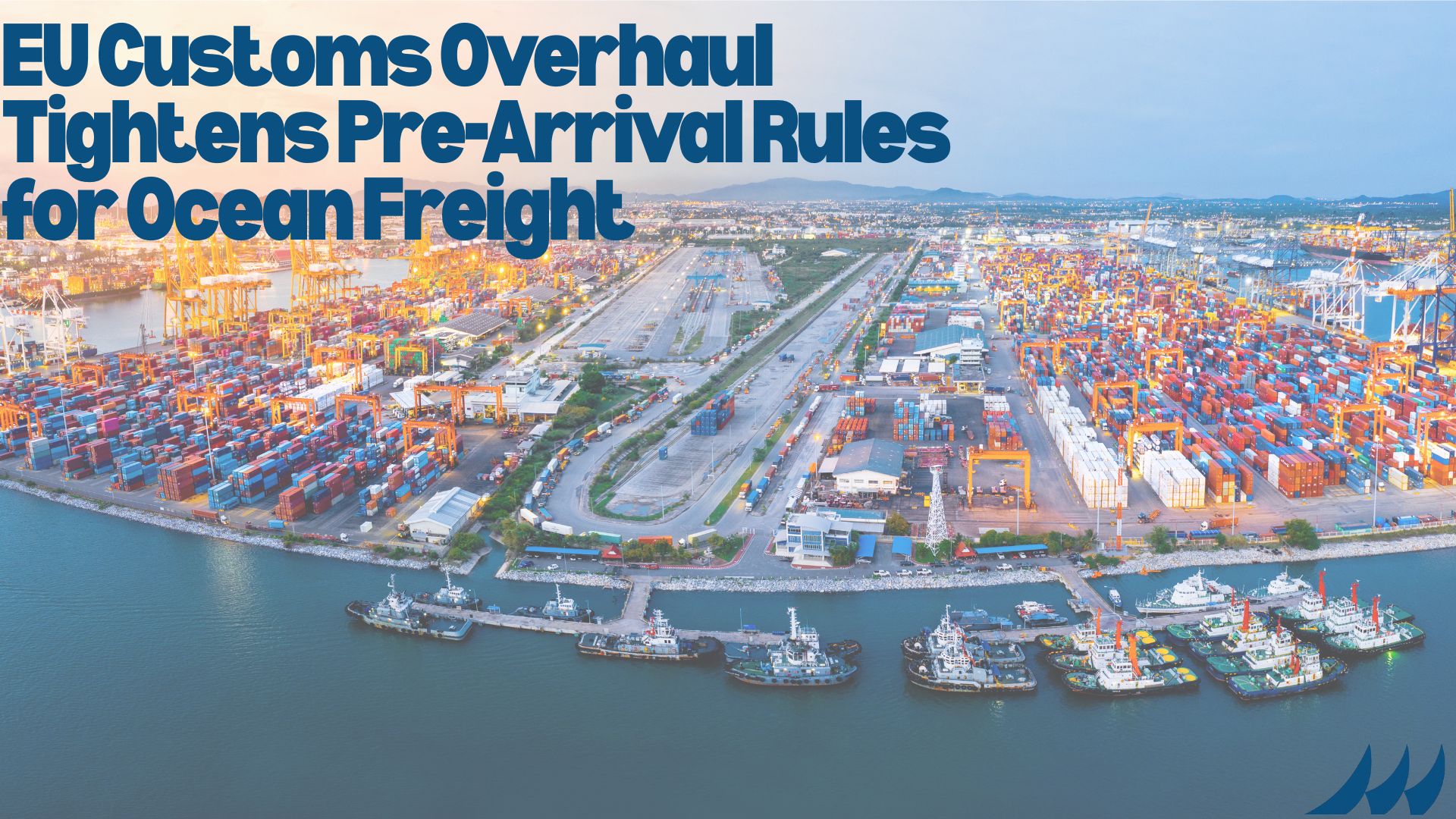

As of July 1, 2026, the European Union's Import Control System 2 (ICS2) is now fully operational, completing a multi-year customs modernization that carries significant implications for ocean carriers and freight forwarders moving cargo into EU ports. The system requires all maritime shipments bound for the EU, Norway, and Switzerland to be accompanied by a completed Entry Summary Declaration (ENS) before the vessel departs and filed no later than 24 hours prior to loading.
Under ICS2, ocean carriers and freight forwarders share filing responsibilities through a "multiple filing" structure. Carriers and freight forwarders are required to submit various pieces of master and house level data, respectively, and the declarations from each side must match to proceed. In many cases, ocean carriers are now requiring freight forwarders to file house-level data independently as a condition of the business relationship, making compliance not just a regulatory obligation but a commercial one as well.
The data requirements are more stringent than in the previous system. Each statement must include a Harmonized System (HS) code per product, detailed descriptions of goods and their intended uses, and EORI numbers for both consignors and consignees. Incorrect or missing data at the house level exposes the forwarder to consequences including cargo holds, clearance delays, or refusal of entry at EU ports.
For short sea shipments, the window is narrower still. The ENS must be accepted at least two hours before the vessel arrives at its first EU port of call. As ICS2 compliance becomes the baseline for all cargo moving through European waters, the margin for incomplete documentation has effectively been eliminated.
Read More at International Federation of Freight Forwarders Associations
Recent News
.gif)











.jpg)

.jpg)

.png)
.gif)
.png)
.gif)












.jpg)



















.jpg)





.png)
.png)
.png)
.gif)
.png)
.png)
.png)
.gif)
.png)


.png)
.gif)

.png)
.png)


.gif)
.png)


.png)
.png)

.png)
.png)


.png)
.gif)


.svg)
.svg)

DISCLAIMER: The information contained in this website, as well as all trademarks and logos displayed therein, belong solely to Hudson Shipping Lines (Hudson), and may not be copied or reproduced in any format for either public or commercial use without the express written consent of Hudson. Furthermore, Hudson may change said information at any time without prior notice. Though Hudson takes reasonable measures to ensure the accuracy of the content of this website, and the correct operation of same, Hudson does not guarantee the completeness of this information at all times. Therefore, said information must always be verified by contacting Hudson's local offices prior to acting upon it. Neither Hudson, nor any third party connected with Hudson, can be held liable for any direct or indirect damages derived from accessing this website and the information contained therein. Hudson assumes no responsibility for the content of any web links made available on this site.



.jpg)

.gif)
