Drone Delivery Trends Toward the Mainstream
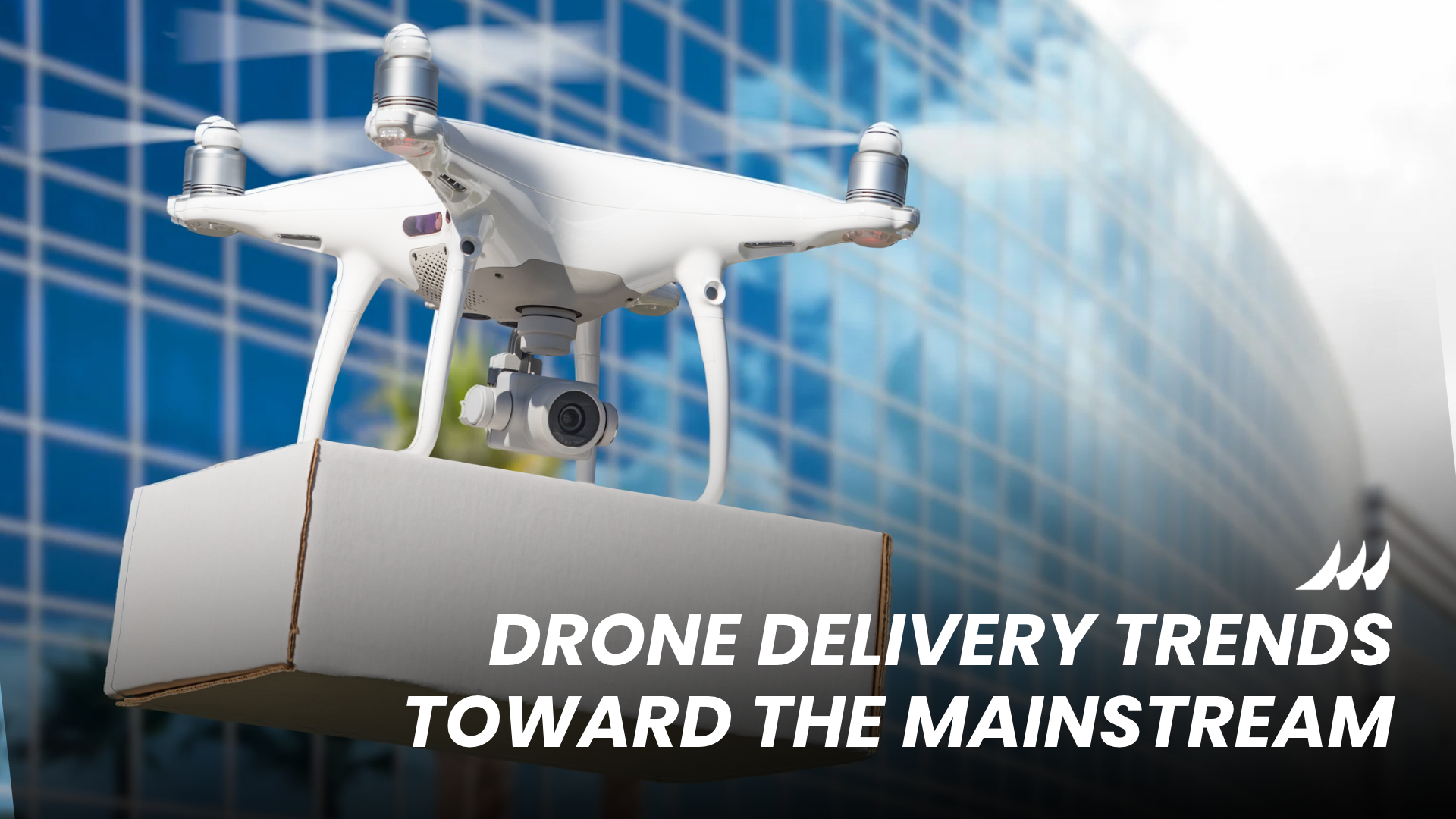

Drone delivery took a substantial step toward national scale this week. Zipline, a US-based autonomous drone provider, announced a $1.5 billion funding round and a multi-year agreement to add 300 Walmart drone delivery sites. The next day, Zipline’s main US rival, Wing, announced plans for a Texas aircraft factory.
Zipline's funding and the Walmart expansion
On November 5, Zipline declared it had raised $1.5 billion at a $21.5 billion post-money valuation. Paradigm, WCM Investment Management and Layer Global led the funding round. Other participants included Valor Equity Partners, Fidelity Management & Research Company, Uber, Tiger Global, J.P. Morgan, ARK Invest and Salesforce Ventures. The company said the money will go toward expanding U.S. manufacturing and hiring to build a nationwide drone delivery network.
On the same day, Walmart announced that it will add 300 new drone delivery sites with Zipline under a multi-year agreement that has the potential to grow even further. Walmart did not name locations or a rollout schedule beyond describing the sites as nationwide. The retailer claimed it has completed more than 2 million drone deliveries, and that it has worked with Zipline since 2021.
Zipline's home delivery aircraft flies at roughly 330 feet while a pod carrying the order descends on a tether to a front yard, backyard or driveway. Walmart says deliveries can be completed in as little as 30 minutes.
A scope beyond retail
Zipline also published figures from restaurant customers. For a cohort it tracked from March to October, Zipline's share of their delivery revenue rose from 10.8% to 34.9%, and their delivery gross merchandise value grew 26%. The company said Zipline orders did not reduce demand on other platforms. It is worth nothing that these figures are company-reported and have not been independently verified.
Zipline reported a median checkout-to-doorstep time of 19 minutes in October, versus more than 30 minutes for traditional delivery, and more than one million deliveries in the Dallas–Fort Worth area this year. It also said Uber is targeting one million deliveries a day with Zipline by 2029, and that its aircrafts have flown 150 million commercial autonomous miles without a major safety incident.
Wing expands in Texas
On November 6, Wing, Alphabet's drone delivery unit, announced it will invest up to $125 million over two years in a Fort Worth, Texas, manufacturing operation, according to industry outlet DroneXL. The plant would employ upto 100 people and be able to build tens of thousands of aircrafts a year. It will produce Wing's next-generation delivery aircrafts for its Walmart network, which is contracted to reach more than 270 stores by 2027. Wing claims it serves more than 70 sites today and has placed a significant focus on the United States for future growth opportunities.
Regulation remains a pacer
Both companies currently fly under FAA Part 135 air carrier approvals, which are granted on a site-by-site basis. DroneXL reports that a proposed FAA rule, known as Part 108, has been under White House review since July 10, 2026. This rule is intended to create a more standardized framework for routine beyond-visual-line-of-sight operations. Its timing will influence how quickly the announced networks can grow.
What this means for supply chains
For retailers and logistics operators, the announcements show last-mile investment shifting from pilots toward dedicated manufacturing and large site rollouts. Drone delivery still covers a small share of overall parcel volume, and eligible items are limited to what an aircraft can carry. Even so, the scale of the capital and the retail footprint involved suggests that fast, short-range delivery from existing stores is becoming a planning consideration for fulfillment networks.
Recent News
















































DISCLAIMER: The information contained in this website, as well as all trademarks and logos displayed therein, belong solely to Hudson Shipping Lines (Hudson), and may not be copied or reproduced in any format for either public or commercial use without the express written consent of Hudson. Furthermore, Hudson may change said information at any time without prior notice. Though Hudson takes reasonable measures to ensure the accuracy of the content of this website, and the correct operation of same, Hudson does not guarantee the completeness of this information at all times. Therefore, said information must always be verified by contacting Hudson's local offices prior to acting upon it. Neither Hudson, nor any third party connected with Hudson, can be held liable for any direct or indirect damages derived from accessing this website and the information contained therein. Hudson assumes no responsibility for the content of any web links made available on this site.