New AI Agent Aims to Untangle Shipping's Growing Carbon Compliance Capacity

Maritime compliance platform BetterSea has launched an artificial intelligence agent designed to help shipping companies manage the rapidly growing set of rules governing vessel emissions, as 2026 brings the toughest regulatory requirements yet to the industry.
The tool, named Stylianos, works inside BetterSea's existing compliance platform and is built to take users from a basic question about a ship's regulatory exposure to a prepared course of action, according to the company. It is available now to BetterSea's existing platform users at no additional cost.
Stylianos covers four of the major carbon-related regimes shipowners and operators must now navigate: the European Union's Emissions Trading System, FuelEU Maritime, the UK Emissions Trading Scheme, and carbon taxes imposed by Djibouti and Gabon. Users can ask the agent to estimate compliance costs for a specific vessel or voyage scenario, compare different compliance strategies, and identify optimal "pooling" arrangements — a mechanism that lets operators offset emissions across a fleet rather than individual vessels.
The agent can also source quotations for FuelEU surplus credits and ETS allowance transactions through BetterSea's marketplace and run compliance checks that include assessing counterparty risk.
Notably, the system stops short of executing any transaction on its own. "The important distinction for us is that AI supports decision-making without removing control from the user," said Dr. Gordana Ilic, the company's co-CEO. "This gives teams the speed of AI while preserving the oversight required for executing compliance."
Maximilian Schroer, BetterSea's other co-CEO, framed the tool as a response to mounting administrative pressure on shipping companies. "Shipping companies are dealing with more compliance data, more regulations, and more execution steps than ever before, on top of their day-to-day workload," Schroer said. "We want users to be able to ask a straightforward question about a vessel or voyage and in minutes move from understanding their exposure to evaluating the best strategy and preparing execution within the same platform."
The company also said its underlying AI models are not trained on customer data, an assurance aimed at operators wary of exposing commercially sensitive vessel and voyage information.
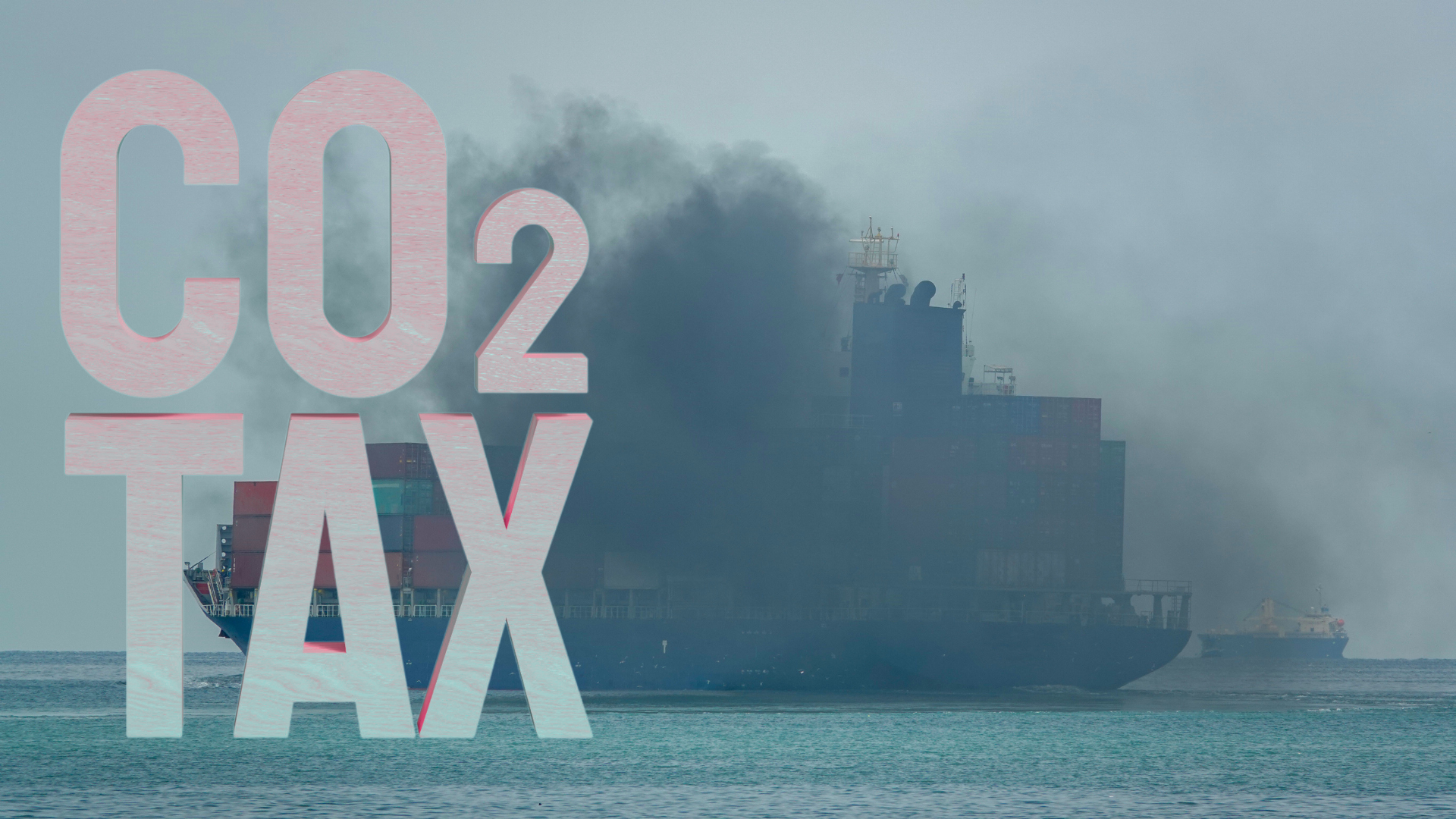
The launch lands at a pivotal moment for shipping emissions regulation. As of January 2026, all EU-regulated emissions fall fully under the EU ETS, marking the final step up from the 70% phase-in that applied in 2025; a shift that increases cost exposure across most deep-sea and short-sea shipping segments. The same year marks the first full compliance cycle under FuelEU Maritime, the EU rule requiring vessels to progressively cut the greenhouse gas intensity of the energy they use. Meanwhile, the UK's own emissions trading scheme is moving closer to implementation, adding yet another regime for operators trading in and out of British ports to track.
That layering of overlapping, region-specific rules has created exactly the kind of fragmented, data-heavy compliance burden that AI tools are increasingly being built to address across the shipping industry — from route planning and safety monitoring to, now, the financial and regulatory side of decarbonization.
*Hudson Shipping and its affiliates have no business relationship with BetterSea and do not endorse Stylianos or any other product mentioned in this article.
Recent News
.png)
.gif)









.jpg)
.jpg)


.png)
.gif)
.png)
.gif)











.jpg)

















.jpg)




.png)
.png)
.png)
.gif)
.png)
.png)
.png)
.gif)
.png)


.png)
.gif)

.png)
.png)


.gif)
.png)


.png)
.png)

.png)
.png)


.png)


.svg)
.svg)

DISCLAIMER: The information contained in this website, as well as all trademarks and logos displayed therein, belong solely to Hudson Shipping Lines (Hudson), and may not be copied or reproduced in any format for either public or commercial use without the express written consent of Hudson. Furthermore, Hudson may change said information at any time without prior notice. Though Hudson takes reasonable measures to ensure the accuracy of the content of this website, and the correct operation of same, Hudson does not guarantee the completeness of this information at all times. Therefore, said information must always be verified by contacting Hudson's local offices prior to acting upon it. Neither Hudson, nor any third party connected with Hudson, can be held liable for any direct or indirect damages derived from accessing this website and the information contained therein. Hudson assumes no responsibility for the content of any web links made available on this site.



.jpg)

.gif)
