Panama Canal Transit Prices Hit Record Highs Amid War and Drought
Public Relations
August 18, 2026
Shipping companies are paying record rates to move vessels through the Panama Canal, as a war-related closure of the Strait of Hormuz and a strengthening El Niño weather pattern converge to squeeze one of the world's most important trade routes.
On August 14, SK Shipping Co. paid $4.6 million at auction for its supertanker, “G. Arete” to traverse through the canal. According to gCaptain and the Maritime Executive, this marks the highest price ever paid for a single passage. Two days earlier, the owner of the container ship “Seaspan Benefactor,” a 10,100-TEU vessel operated by Ocean Network Express, paid nearly $4 million for a Neopanamax transit slot scheduled for August 16–17.
These figures demonstrate a dramatic shift from historical norms. As recently as February 2026, Neopanamax vessels were reportedly clearing the canal's daily priority auctions for roughly $55,000 each. Daily average auction prices for August have reached approximately $1.1 million, according to Argus Media data reported by the Financial Times. The average auction price for Neopanamax vessels, the largest ships the canal can accommodate, has set a record of $2.5 million per slot, with individual bids as high as $3.78 million.
Wait times have grown accordingly. Without a pre-booked reservation, a Neopanamax vessel now faces roughly a 10-day wait at the canal's Pacific entrance, marking the longest backlog since May of this year. As of August 12, approximately 110 vessels were queued to transit, with 78 of them holding reservations.
Two Crises Converging
The surge in transit costs traces two separate disruptions hitting at once. The Strait of Hormuz, which normally carries about 20% of the world's oil shipments, has been effectively closed to large commercial vessels since late February 2026 following a war triggered by U.S. and Israeli strikes on Iran. Asian buyers of crude oil and petroleum products that previously sourced from the Middle East have shifted to U.S. Gulf Coast suppliers, and the Panama Canal offers the shortest route between the Gulf and Asia. The Red Sea's Bab el-Mandeb Strait remains dangerous amid sustained Houthi attacks, pushing additional traffic toward Panama.
At the same time, a developing El Niño pattern is reducing rainfall across Central America, lowering water levels in Gatun Lake, the reservoir that feeds the canal's lock system. NOAA's Climate Prediction Center has put the odds at 81% that this El Niño will reach "very strong" strength by late 2026. The Panama Canal Authority has cut the maximum draft allowed for Neopanamax vessels five times this year, most recently to 48.5 feet on August 15, with further cuts already scheduled. Lower draft limits mean ships must carry less cargo per transit, intensifying competition for the slots that remain.
No Quick Fix
The Panama Canal Authority is pursuing two long-term projects to reduce its exposure to drought: a 76-kilometer pipeline to move LPG across the isthmus without using the locks, and a new reservoir on the Rio Indio River to supplement Gatun Lake's water supply. Unfortunately for both shippers and consumers, neither of these measures are expected to be operational before 2030. Until then, the canal's capacity will continue to depend on rainfall patterns that are increasingly shaped by El Niño cycles, meaning further disruptions of this kind remain a real risk for global shipping operators.
Panama Canal Transit Prices Hit Record Highs Amid War and Drought
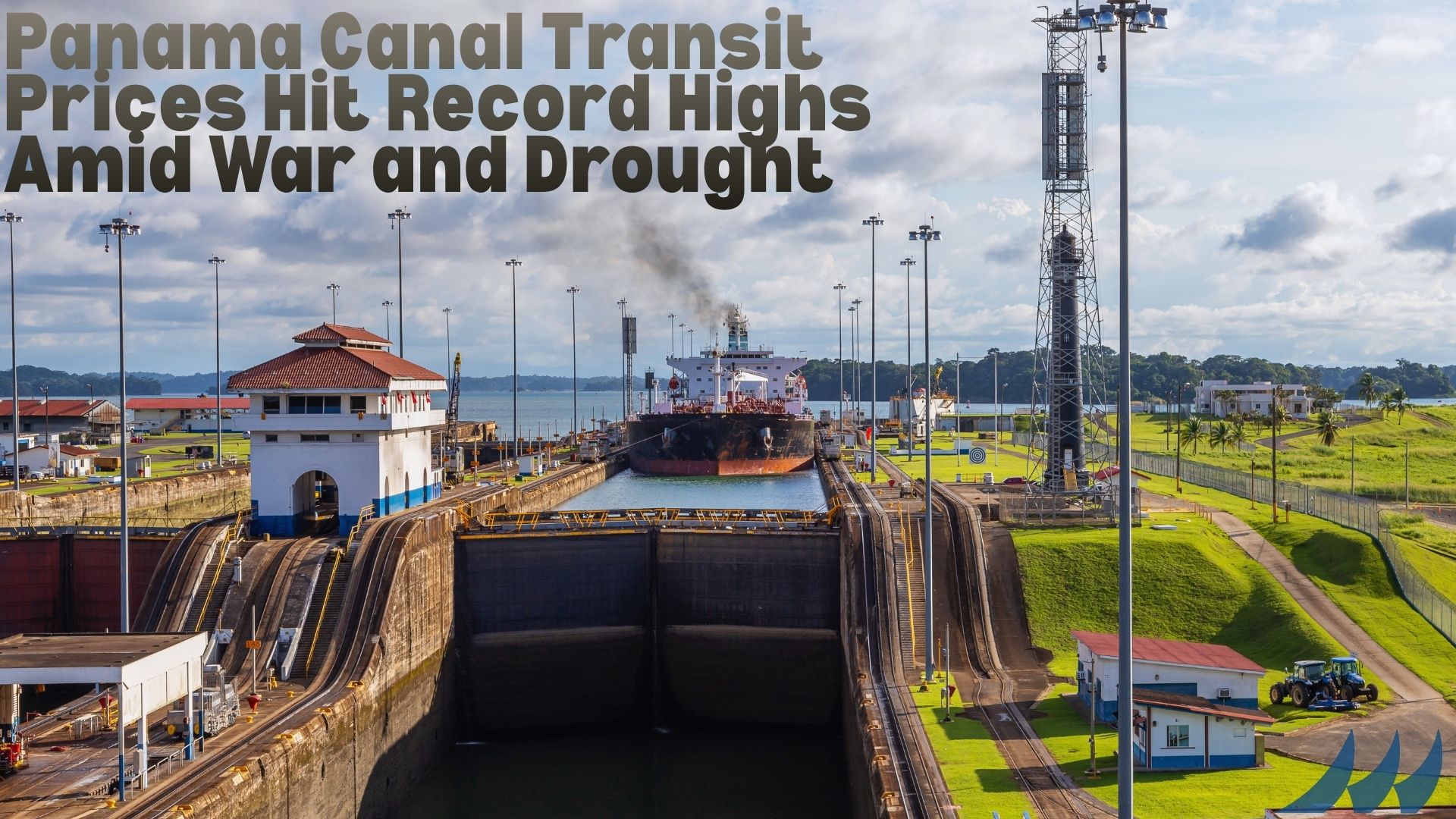
Shipping companies are paying record rates to move vessels through the Panama Canal, as a war-related closure of the Strait of Hormuz and a strengthening El Niño weather pattern converge to squeeze one of the world's most important trade routes.
On August 14, SK Shipping Co. paid $4.6 million at auction for its supertanker, “G. Arete” to traverse through the canal. According to gCaptain and the Maritime Executive, this marks the highest price ever paid for a single passage. Two days earlier, the owner of the container ship “Seaspan Benefactor,” a 10,100-TEU vessel operated by Ocean Network Express, paid nearly $4 million for a Neopanamax transit slot scheduled for August 16–17.
These figures demonstrate a dramatic shift from historical norms. As recently as February 2026, Neopanamax vessels were reportedly clearing the canal's daily priority auctions for roughly $55,000 each. Daily average auction prices for August have reached approximately $1.1 million, according to Argus Media data reported by the Financial Times. The average auction price for Neopanamax vessels, the largest ships the canal can accommodate, has set a record of $2.5 million per slot, with individual bids as high as $3.78 million.
Wait times have grown accordingly. Without a pre-booked reservation, a Neopanamax vessel now faces roughly a 10-day wait at the canal's Pacific entrance, marking the longest backlog since May of this year. As of August 12, approximately 110 vessels were queued to transit, with 78 of them holding reservations.
Two Crises Converging
The surge in transit costs traces two separate disruptions hitting at once. The Strait of Hormuz, which normally carries about 20% of the world's oil shipments, has been effectively closed to large commercial vessels since late February 2026 following a war triggered by U.S. and Israeli strikes on Iran. Asian buyers of crude oil and petroleum products that previously sourced from the Middle East have shifted to U.S. Gulf Coast suppliers, and the Panama Canal offers the shortest route between the Gulf and Asia. The Red Sea's Bab el-Mandeb Strait remains dangerous amid sustained Houthi attacks, pushing additional traffic toward Panama.
At the same time, a developing El Niño pattern is reducing rainfall across Central America, lowering water levels in Gatun Lake, the reservoir that feeds the canal's lock system. NOAA's Climate Prediction Center has put the odds at 81% that this El Niño will reach "very strong" strength by late 2026. The Panama Canal Authority has cut the maximum draft allowed for Neopanamax vessels five times this year, most recently to 48.5 feet on August 15, with further cuts already scheduled. Lower draft limits mean ships must carry less cargo per transit, intensifying competition for the slots that remain.
No Quick Fix
The Panama Canal Authority is pursuing two long-term projects to reduce its exposure to drought: a 76-kilometer pipeline to move LPG across the isthmus without using the locks, and a new reservoir on the Rio Indio River to supplement Gatun Lake's water supply. Unfortunately for both shippers and consumers, neither of these measures are expected to be operational before 2030. Until then, the canal's capacity will continue to depend on rainfall patterns that are increasingly shaped by El Niño cycles, meaning further disruptions of this kind remain a real risk for global shipping operators.
We use cookies to enhance your browsing experience, serve personalized ads or content, and analyze our traffic.
By clicking "Accept All", you consent to our use of cookies.
Read our
Privacy Policy
and
Terms & Conditions.
Manage Your Cookie Preferences
Choose which cookies you allow
Strictly necessary
Required for the site to function. Always on.
Remember settings and improve your experience.
Help us understand traffic and improve the website.
Personalized ads/content and marketing measurement.
Browser cookie settings (optional):
Google Chrome: Settings > Privacy and security > Cookies and other site data
Mozilla Firefox: Settings > Privacy & Security > Cookies and Site Data
Microsoft Edge: Settings > Cookies and site permissions