Cocoa Shortfall Fears Highlight Growing Volatility Across Global Commodity Supply Chains
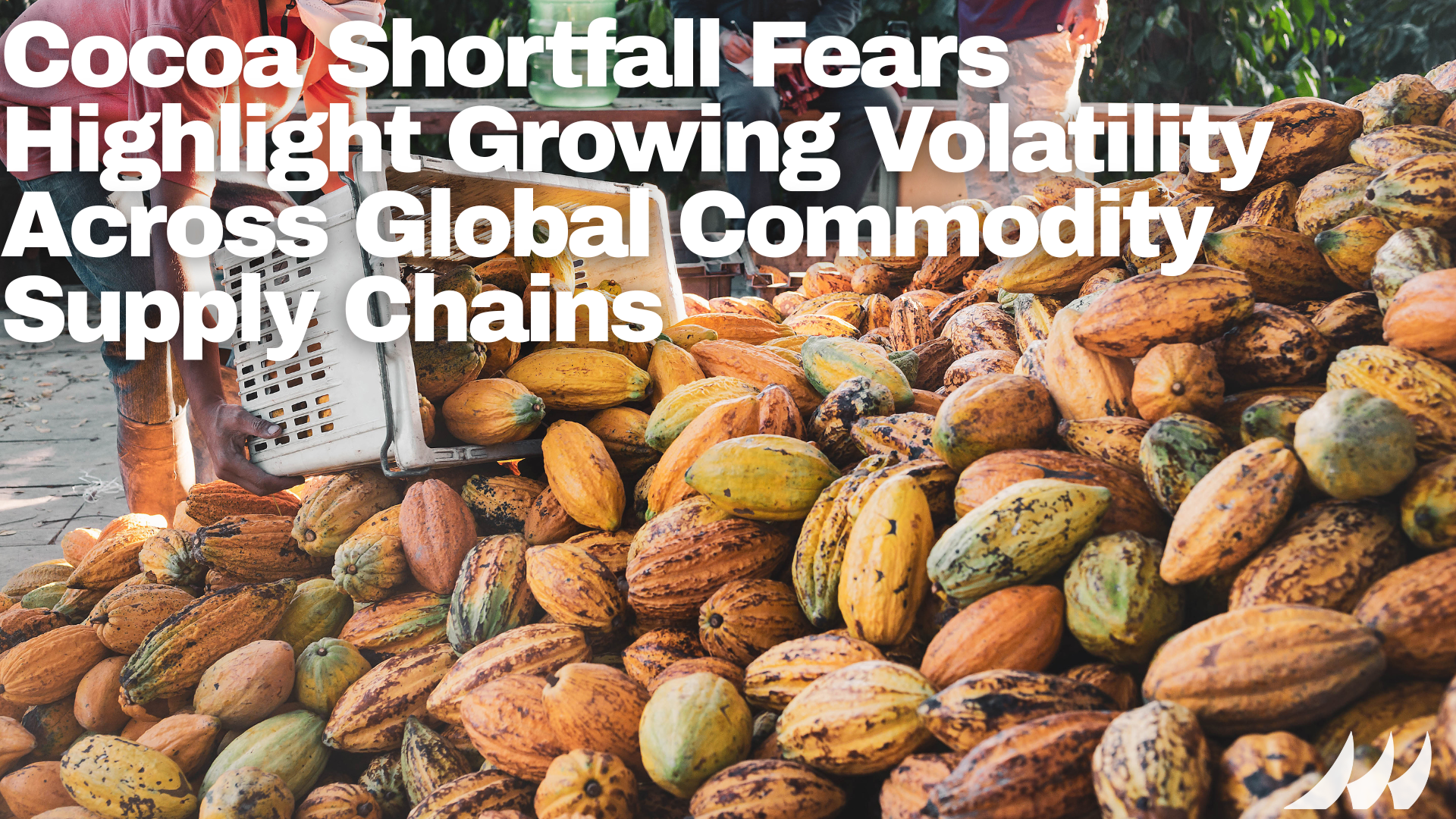

Global cocoa markets are weighing the risk of a renewed supply deficit for the 2026/27season, as a strengthening El Niño weather pattern threatens to cut into harvests across West Africa, the source of more than half the world's cocoa.
Brandon Tay Hoe Lian, chief executive of Asia’s largest cocoa manufacturer, Guan Chong Berhad, warned that the global market could swing to a deficit of 300,000 to 400,000 tons in the 2026/27 season, a sharp reversal from the roughly 100,000-ton surplus recorded a year earlier, per Bloomberg. Tay said cocoa futures, trading around $6,500 a ton at the time of his comments in early September, could climb toward $8,000 a ton by December if the deficit materializes.
Not every analyst agrees that a deficit is looming. Forecasters at BMI, Hedgepoint Global Markets and StoneX have all forecasted the market will still post a surplus in 2026/27, though a smaller one than the prior season. StoneX recently cut its surplus forecast to 25,000 tons from 149,000 tons, and Transgraph Consulting lowered its estimate to 80,000 tons from 415,000 tons — signaling that even bullish analysts see the cushion shrinking quickly.
The uncertainty centers on Ghana and Ivory Coast, which together supply more than half of the world's cocoa. Ghana's output for the 2026/27 season is projected to fall between 18% and 38%, to a range of 470,000 to 620,000 metric tons, down from 760,000 tons one year ago, according to Ghanaian industry estimates reported by Business Recorder and CNBC Africa. Beyond weather, Ghana's crop is also being hit by aging trees, black pod disease, swollen shoot virus, and pollination issues that existed even before the current El Niño concerns.
In Ivory Coast, exporters and pod counters surveyed by Reuters expect the maincrop to fall more than 10%, to between 1.35 million and 1.45 million tons, while Oxford Economics expects that the full 2026/27 harvest could be down closer to 20%. Heavy rainfall in June damaged pod development in both countries, and by late July, strengthening El Niño conditions began cutting further into yield expectations. Ivory Coast has held its fixed farmgate price for the 2026/27 main crop at 1,200 CFA francs (about $2.12) per kilogram, the price paid directly to farmers regardless of global market swings.
On the demand side, Asia's cocoa grinding volume rose 25% in the second quarter, according to industry data, even as chocolate manufacturers have been lessening bar sizes and increasing use of cocoa substitutes to manage costs after the price spikes of the past two years.
The situation illustrates a pattern that extends well beyond the cocoa trade: a weather-driven shortfall concentrated in two countries can ripple through global supply chains long before it reaches consumers. Confectionery and food manufacturers that rely on cocoa as a raw material face input-cost volatility that pushes them toward hedging, reformulation, or supplier diversification, as seen in the industry's shift toward smaller bar sizes and substitute ingredients. Those cost pressures typically flow downstream to packaging suppliers, retailers, and the freight and warehousing networks that move cocoa from West African ports to grinding and processing facilities around the world. For companies managing physical logistics, a tightening commodity market like this one is a reminder that agricultural sourcing risk can be just as consequential as capacity or freight-rate disruptions and often calls for the same levels of advance planning and contingency sourcing.
The dynamic leaves the market split between comfortable near-term inventories and rising concern over the size of the main crop still to come. For manufacturers, traders and logistics providers that depend on a stable cocoa supply chain, the coming months of harvest data out of Ghana and Ivory Coast, along with the pace of El Niño's development, will determine whether 2026/27 becomes the tightest cocoa market in three years or another year of a narrowing, but intact, surplus.
Recent News








.jpg)

.jpg)


.png)
.gif)
.png)
.gif)











.jpg)


















.jpg)






.png)
.png)
.png)
.gif)
.png)
.png)
.png)
.gif)
.png)


.png)
.gif)

.png)
.png)


.gif)
.png)


.png)
.png)

.png)
.png)


.png)
.gif)
.gif)


.svg)
.svg)

DISCLAIMER: The information contained in this website, as well as all trademarks and logos displayed therein, belong solely to Hudson Shipping Lines (Hudson), and may not be copied or reproduced in any format for either public or commercial use without the express written consent of Hudson. Furthermore, Hudson may change said information at any time without prior notice. Though Hudson takes reasonable measures to ensure the accuracy of the content of this website, and the correct operation of same, Hudson does not guarantee the completeness of this information at all times. Therefore, said information must always be verified by contacting Hudson's local offices prior to acting upon it. Neither Hudson, nor any third party connected with Hudson, can be held liable for any direct or indirect damages derived from accessing this website and the information contained therein. Hudson assumes no responsibility for the content of any web links made available on this site.


.jpg)
.gif)
.gif)
